The Future of Pickleball: Why the Fastest-Growing Racket Sport Keeps Growing
Pickleball has gone from a 1965 backyard game to the fastest-growing racket sport — why it spreads so fast, where the growth is heading, and what buyers should look for in a supplier.
Pickleball was born in the United States in 1965. For decades it was a niche pastime. In recent years it has become, in the deck's words, the most popular emerging leisure-competitive sport — and the question buyers now ask is not whether it will keep growing, but where the next growth will come from.
1. Why it spreads so fast: low barrier, high fun
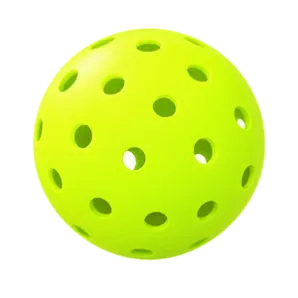
Pickleball blends tennis, badminton, and table tennis. The deck sums it up as a big table-tennis paddle, on a badminton court, hitting a plastic ball with holes.
Three things make it easy to start:
- Flexible courts: The court is close to a doubles badminton court in size, and the net is only about 91 cm high at the centre. It is easy to set up, and the demands on the venue are low.
- Simple equipment: A short-handled solid paddle and a holed hard plastic ball. Low wind resistance, moderate ball speed, and easy control for beginners.
- Friendly rules: Underhand serving from tennis, scoring from badminton, and hitting from table tennis. The rules are easy to learn, and the game is both entertaining and competitive.
Compared with tennis, pickleball asks less of the player's power, the ball is slower and its landing point is easier to control, and the rules are simple enough for a beginner to learn in one session. The court is small and the running range is limited, which greatly reduces impact on knees and joints — so the sport works for all ages, for men and women, and for players of almost any level.
That is the core of its growth: it is easy to start, friendly to the body, and fun from the first game.
2. The social engine: doubles, clubs, and community
Pickleball is not only a sport. In the deck's description, it is a social carrier.
The pace is flexible, rallies are long, and the game is gentle in its confrontation. Doubles is the main form, which makes it a natural fit for friends, family, and neighbours. A game is as much a gathering as a match.
That social character is what turns a first-time player into a regular:
- Clubs give beginners a place to learn and regulars a place to play.
- Tournaments give advanced players a goal and give the sport visibility.
- Training centres and coaching turn casual interest into skill, and skill into demand for better equipment.
- Facilities — courts, clubs, and community centres — turn one-off interest into weekly habits.
For B2B buyers, this matters: demand does not come only from individual players. It comes from distributors, wholesalers, brand owners, clubs, facilities, training centres, tournament organizers, coaches, and sports retailers — the same buyer groups this site serves. When a club opens or a tournament is held, it needs balls, paddles, and accessories in bulk, not one at a time.
3. From North America to the world
Pickleball spread first in North America and is now, in the deck's words, sweeping from North America to the world, with market size doubling and capital attention rising.
The deck's market figures are:
- Global market size: US$1.76 billion in 2025, US$1.95 billion expected in 2026, with a compound annual growth rate of 10.74% from 2026 to 2035.
- China market: RMB 4.32 billion in 2025, RMB 6.18 billion expected in 2026, RMB 22.19 billion forecast for 2030, with a compound annual growth rate of 39.2% from 2025 to 2030.
Even without relying on any single number, the direction in the deck is consistent: a high-growth, blue-ocean market, with participation rising year by year and equipment demand growing with it.
4. What is driving growth in China
The deck describes China as a future home market with large potential, and lists four drivers:
- Policy support: 22 provincial governments are said to have included pickleball in local sports-industry development plans.
- Infrastructure: The number of standardized courts is said to be growing at a compound annual rate of 58.3%.
- People: Urban consumers aged 25–45 are described as the core buyers, with strong spending power and a demand for healthy living.
- Business models: The deck describes a shift toward club operation, professional events, and skills training, with a clear profit model.
Whether or not any single figure holds up, the pattern is familiar from other markets: policy and courts make the sport possible, a young urban consumer base makes it commercial, and clubs, events, and training make it repeatable.
5. Where the equipment market is heading
Three shifts in the deck point to where demand is going:
From one product to a full range. Buyers are no longer asking only for a ball or a paddle. The deck describes three tiers — professional competition, advanced training, and leisure — each with different needs: a larger sweet spot and more forgiveness for beginners, stronger control and spin feedback for advanced players, and balanced performance and grip for everyday training. For a supplier, that means offering a range, not a single item, and offering OEM/ODM customization so each brand can serve its own tier.
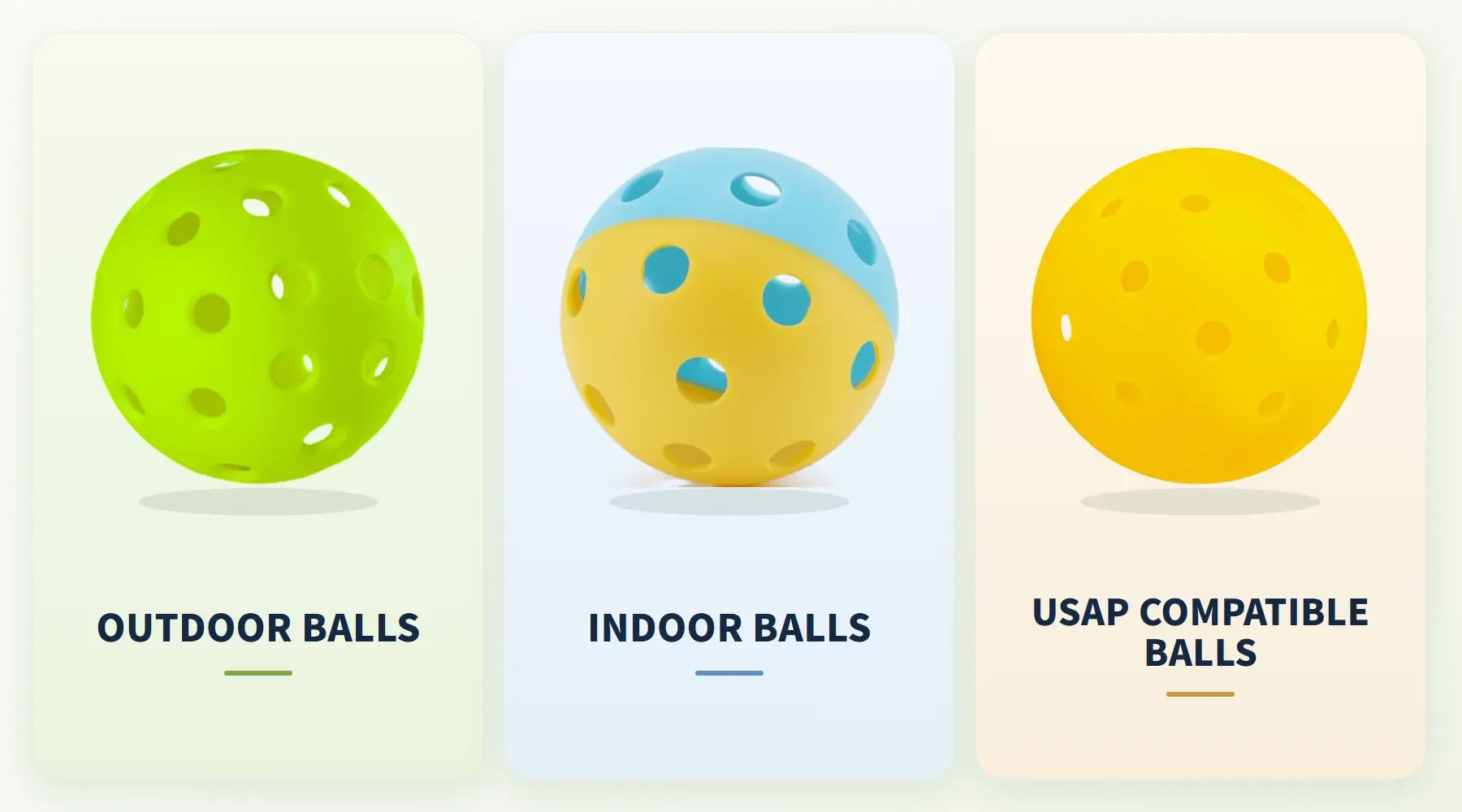
From performance to choice. Balls are now chosen by process and hole count, not just by price: rotomolded PE 40-hole balls for outdoor tournaments, softer indoor balls for wood and plastic floors, and injection-molded TPE balls for training. Paddles are chosen by face material, core, and process: carbon fiber and hot-press for competition, fiberglass and cold-press for entry level. Buyers who understand these differences buy more precisely — and buy again.
From product to solution. The deck describes the shift from selling a single piece of equipment to providing design, mold development, production, packaging, and accessories together. For brand owners and distributors, the value is not only in the ball or the paddle, but in a supplier who can deliver a complete, customized range on time.
6. What this means for buyers
If you are a distributor, wholesaler, brand owner, club, or retailer, the opportunity is not a single order. It is a growing base of players who need balls that wear out, paddles that upgrade as they improve, and accessories that go with both.
What to look for in a supplier as the market grows:
- A real range: Tournament-grade balls, training balls, and indoor/outdoor options — and paddles from entry-level to professional.
- Consistent quality: Diameter, weight, roundness, and balance checked batch by batch, not just on a sample.
- Customization: Your own logo, colours, and packaging on a neutral / unbranded base, with OEM/ODM support.
- Low trial cost: A low MOQ for stock items, so you can test a market before committing to a large order. Our stock balls have a MOQ of 1 pc; OEM/ODM MOQ depends on your requirements.
- Compliance: RoHS and REACH for materials, and USAP approval where tournament use is planned.
Pickleball's advantage is that it is still early. The sport is easy to learn, social by design, and playable by almost anyone — and the equipment market is still being built. For buyers who enter now, with the right range and the right supplier, the growth is not a forecast to watch. It is a market to serve.
For buyers
We supply neutral / unbranded pickleball balls and paddles with OEM/ODM customization available. MOQ is 1 pc for stock balls and 1 set for the T700 paddle set; OEM/ODM MOQ depends on your requirements. No prices are shown on this site — please send an inquiry for a quote and samples.
Related products: 40 Holes Pro-Grade Outdoor Tournament Pickleball Balls | 48 Holes Indoor & Outdoor Pickleball Balls | T700 Carbon Fiber Pickleball Paddle Set – Control / Attack